

Guomao Group has been a manufacturer specializing in power transmission industry for 30 years with a wide product series including speed reducer boxes, gear motors, electric motors and become a bellwether in the intelligent automation.
Wide Range of Fields
We have established business relationship with leaders in various fields such as energy, mining, construction, logistics, pharmaceuticals, chemicals, machinery and robotics.
Wide Range of Applications
Our products are widely used in Garment Shops, Manufacturing Plant, Machinery Repair Shops, Food & Beverage Factory, Printing Shops, Construction works, Energy & Mining, Food & Beverage Shops, Hotels, Building Material Shops, Farms, Restaurant, Home Use, Retail, Food Shop, Advertising Company, Energy & Mining, Other.
Quality Assurance
Each batch of goods has a corresponding quality inspection report to solve your concerns about product quality.
Quick Transportation
We cooperate with professional sea, air and logistics companies to provide you with the best transportation solution.


What Is AC Electric Motor
An AC motor or alternating current motor is an electric motor that consists of a stator with a coil that is supplied with alternating current to convert electric current into mechanical power. The stator is the stationary part of the motor while the rotor is the rotating part. If you want to know the specifications and prices of AC Electric Motor, please contact us!
Advantages of AC Electric Motor
High Efficiency
AC motors are known for their high efficiency, converting a large portion of electrical energy into mechanical energy. This efficiency reduces power consumption and operating costs, making AC motors an economical choice for various applications.
Versatility
AC motors are versatile and can be designed to meet specific requirements. They can provide variable speed control, making them suitable for applications that require precise motor control. AC motors can also be easily integrated into existing systems, providing flexibility and adaptability.
Cost-Effective
The widespread use of AC motors has led to their mass production, resulting in cost-effective solutions. AC motors are readily available in the market, making them a cost-efficient choice for various industries and applications.
Low Maintenance
AC motors require minimal maintenance, reducing downtime and associated costs. With no brushes or commutators to replace, AC motors offer a longer lifespan and higher reliability compared to other motor types.
Synchronous Motor
In this type of AC motor, the rotation of the shaft is synchronized with the frequency of the supply current. Its rotation period is exactly equal to an integral number of AC cycles. This motor contains a multiphase AC electromagnetic on the stator to create a magnetic field that can rotate in time with the vibrations of the line current.
As a result, the rotor gives the second synchronized rotating magnetic field. This motor isn't used to drive a load. But to improve the power factor of a local grid to which it is connected, it can act as a synchronous condenser. It is also used in high-precision positioning devices like modern robots.
Induction Motor
In this type of AC motor, the electromagnetic induction from the magnetic field of the stator winding obtains the electric current in the rotor needed to produce torque. This is why this motor can be made without electrical connections to the rotor. An alternative name to an induction motor is the 'asynchronous motor.' In this motor, the armature winding serves as both the armature winding and field winding.
A flux is produced in the air gap when the stator windings are connected to an AC supply. This flux rotates at a fixed speed which induces voltages in the stator and the rotor winding. A torque is produced when the rotor circuit is closed because the current reacts with the rotating flux.
This induction motor is the most common type of AC motor. It is used for various kinds of pumps, compressors and acts as prime movers for many pieces of machinery. Based on the rotor construction, these motors are classified into two types, namely squirrel-cage and wound-type.
Single Phase Motor
If the AC motor has one stator, it is a single-phase motor. It doesn't have a rotating magnetic field. Instead of a rotation, the winding of the stator creates a field that pulsates. Then the stator field creates currents in the rotor when it is at rest.
The current creates an opposite polarity which applies a turning force to the upper and lower parts of the rotor. The rotor remains stationary because the force remains equal in each direction.
A Single-phase motor is mostly used for small power conversion as it is nearly tiny in size. Almost all domestic appliances, such as refrigerators, fans, washing machines, hairdryers, portable power tools, mixers, grinders, etc., use a single-phase AC motor.
Poly Phase Motor
If an AC motor has two or three-phase motors, it is a polyphase motor. This motor operates with a rotating magnetic field, which is created by a two or three-phase current. The current flows through two or more groups of coils. The polyphase AC motor is mainly used for high-power applications.
It can give a bulk power conversion from electrical to mechanical. For example, power drives for compressors, hydraulic pumps, air conditioning compressors, irrigation pumps, etc.
Constant Speed Motor
This type of AC motor is either constant in speed or does not vary much in a materialistic sense. A few examples of constant speed motors are the synchronous motor, the induction motor with a small slip, the direct-current shunt motor.
It is specially designed to adapt to the driving loom spindles, d-c generators, circular saws, printing presses, etc. In general, it is for equipment that doesn't require more than 150 percent of full-load torque in the starting.
Variable Speed Motor
When a motor has a variable frequency drive or similar technology installed to control motor speed and torque, it is a variable speed motor. This type of motor offers a means for products and production facilities to significantly reduce the amount of energy consumed by the motors in their devices. It can be used to establish a line of pool pumps or upgrade the blower on a consumer refrigeration unit.
Adjustable Speed Motor
The adjustable speed drive motors are used for any application in which there is mechanical equipment. This type of motor provides exact control to ramp and maintain the speed up and down. This can save up energy from 25% to 70%. The drive of this motor can vary the operating speed by changing the electrical frequency input to the motor.
How AC Motors Work


Start Up
An AC motor can be started by a simple on and off switch, which can be a contactor or manual starter. A contactor allows the control of toggle power to an AC motor. Manual starters have a manual switch that allows the operator to switch or change the power. This type of starter is known as across the line meaning the motor is wired directly to the power source. It directly connects the contacts of the motor to the full supply of voltage, which is normally six to eight times the rated current.
Star delta starters are common types of starters, which use a reduced supply of voltage in starting. The stator is connected in a star configuration, which switches to a delta configuration once the motor reaches a certain speed. By doing this, the line current drawn at starting is reduced.
An auto transformer starter uses a similar method as a delta starter. Again, the initial current is limited to reduced voltage being applied to the stator. The advantage of an auto transformer starter is that the torque and current can be adjusted by the correct tapping.
A rotor impedance starter is connected directly to the rotor through the slip rings and brushes. At first, the rotor resistance is set to its maximum but gradually decreases as the motor speed increases. A rotor impedance starter is very bulky and expensive.
Since single phase motors produce a pulsating magnetic field they are unable to be self starting since a pulsating magnetic field torque cannot produce.
Soft starters are a complex version, which allow for the control of acceleration and deceleration for stopping and starting the motor smoothly and evenly, which is not possible with across the line versions. The advantage of soft starters is the reduction of the wear on the motor and the devices to which it is connected.
Stator
The stator produces a rotating magnetic field. It has a solid metal axle, a loop of wire, coils, squirrel cage, and interconnections. Though a squirrel cage is not found in all AC motors, it is the most common type. In AC motors, electricity is sent directly to the outer coils of the stator. The stator has multiple plates that extend out from its center with copper magnetic wire.
For a three phase AC motor, it has three phase windings with a core and housing. The windings are 120° apart, which can be six or twelve windings . The windings are placed on a laminated iron core. The construction of the core can be seen in the diagram below.
Rotor
Unlike a DC motor, the rotor on an AC motor does not have any connection with the external power source. It receives its power from the stator. In a three phase induction motor, the rotor can be a squirrel cage or wound version.
In the squirrel cage version, the rotor consists of rotor bars with end rings at both ends. There are several versions of the squirrel cage rotor, which include split phase, capacitor start, capacitor start and run, permanent split phase capacitor run, and shaded pole with classifications of A, B, C, D, and E. In the majority of cases, the squirrel cage is made of aluminum or copper.
In the operation of a squirrel cage motor, the bars of the rotor interact with the stator's electromagnetic field (EMF). As the current fluctuates, the EMF does the same causing the rotor to rotate producing rotational motion. A key factor in the motion is that the rotor does not turn at the same frequency as the AC current and is constantly trying to catch up, which is how the rotation is produced. If it did have the same frequency, the rotor would freeze, and there would not be any motion.
A wound or slip ring AC motor is a special type of AC motor. It contains the exact same parts as all AC motors but is always three phase. The cylindrical laminated core of the rotor is wound exactly like the windings on the stator with wire. The terminal ends of the wires are connected to slip rings on the output shaft. The slip rings connect to brushes and a variable speed resistor. The slip rings provide control of the speed and torque of the motor, which is the main positive feature of a wound rotor.
Wound motors are asynchronous where there is a difference between the stator speed and the output speed. When generating current in the rotor, the motor will have slippage between the rotating field and the rotor. As the motor is powered, the rotor lessens the strength of the stator, which allows the control of the rotation and the ability to choose torque and running characteristics.
How to Choose AC Electric Motor
The first step in choosing the right motor involves determining torque and revolutions per minute. You need this to calculate the desired power. That's because the motor inside an application needs a certain torque and speed to cause a turning moment. Therefore, the questions you should initially be asking are: what do I need to move, how fast do I need to move it and how heavy is it? To further specify the function of the motor, it is also useful to know whether the motor is just intended to run something, provide constant speed or put something in place. The more accurately you can determine the function of a particular motor, the better the choice of motor type will be. After all, some motors are more suited to a particular function than others.
The next important step in the selection process is to analyse the production environment in which the motor will need to operate. Will the motor be used in a laboratory environment where nothing much happens, or will it be running in a setting where it is exposed to one or more production factors? Choosing the right engine depends on, among other things:
Temperature - At low temperatures, for example, you need specific bearings or a heating element when the motor is stationary.
Medium - Will the motor come into contact with water/moisture or other liquids? If so, could these fluids affect the drive? In that case, a coating will need to be applied and the motor sealed in some way. This will also affect the choice of the motor type.
Food safety - Some of the materials used in the construction of the motor may not be food-safe. If so, we recommend not using such motors in the food industry, especially when motor parts come into contact with food.
Environmental factors - Is the production environment really appropriate for a particular motor? Brushed motors, for example, are unable to cope with polluted environments or those containing aggressive gases. These brushes also create sparks, so they shouldn't be used in environments with flammable substances. You also have to factor in EMC, electromagnetic interference and radiation. In that case, you'd be better off opting for a brushless motor.
The next step is determining the installation space for the motor. In some production environments, this space can be quite limited. An example might be AGV systems (Automated Guided Vehicles). Although these should all be able to lift pallets, the space underneath is very limited. In principle, some motors have a higher power density than others. And one type of motor might also be more compact and deliver more power with the same design than another. If space is indeed a challenge, you could look into applying separate parts of a motor, such as a rotor or stator, separately.
The frequency of movement produced by the motor largely determines its lifespan. Are we talking about an application that needs to go back and forth once a day, or is it something that runs 24/7? An example might be brush motors. Although these contain brushes for transferring energy, they wear out as they are used more often. Brush motors are nevertheless a great solution for something that needs to move back and forth occasionally, as the brushes will last between 3,000 and 5,000 hours. They are obviously less suitable for applications that run continuously.
A motor converts electrical energy into mechanical energy. The efficiency between electrical energy and mechanical energy represents the efficiency of a motor. For example, car engines have very poor efficiency. You have to put a lot of energy into them to get back a certain amount of mechanical energy. Although these engines are more expensive, the extra costs associated with them are recouped in two years at most, and from then on you can start saving on costs. Companies don't often see this investment in the short term; however, they usually take action when the current motor needs to be replaced, at which point they see that it can also save them money in the long run.
What kind of interface should the motor have with your system? If you have a system with a controller, and you want to be able to turn it on/off based on a particular output, or you want to have the option of checking the various statuses, so that you can continuously monitor the performance of the motor, the options in these situations are quite wide. There is plenty of choice between different manufacturers, where some have the option of hooking up to an existing system while others don't. Here, customisation plays a major role.
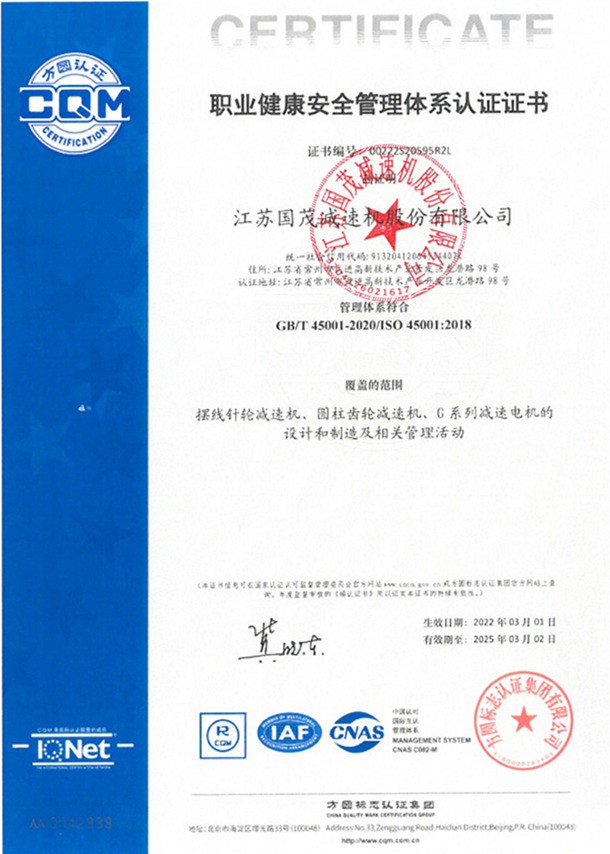
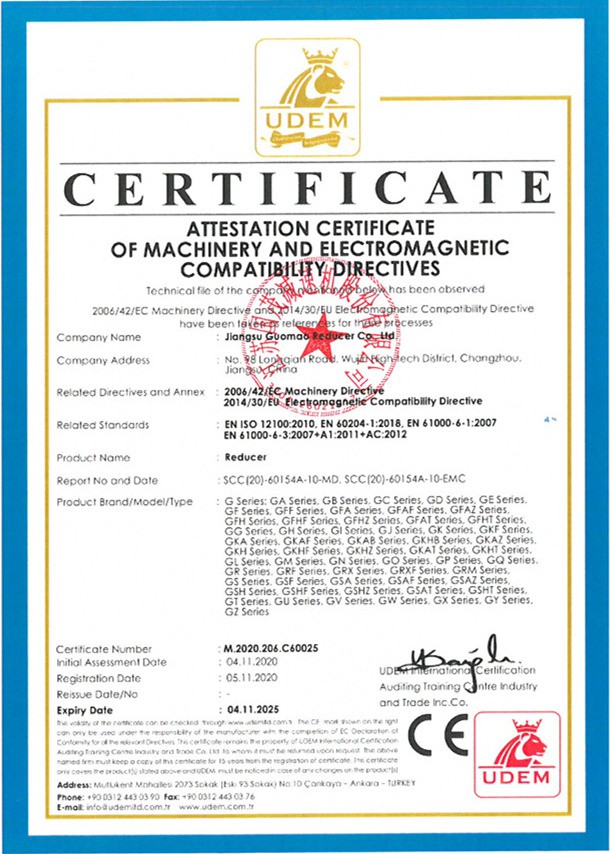
Certifications


Frequently Asked Questions
We're professional ac electric motor manufacturers and suppliers in China. We warmly welcome you to wholesale high quality ac electric motor made in China here from our factory. For customized service, contact us now.