

Guomao Group has been a manufacturer specializing in power transmission industry for 30 years with a wide product series including speed reducer boxes, gear motors, electric motors and become a bellwether in the intelligent automation.
Wide Range of Fields
We have established business relationship with leaders in various fields such as energy, mining, construction, logistics, pharmaceuticals, chemicals, machinery and robotics.
Wide Range of Applications
Our products are widely used in Garment Shops, Manufacturing Plant, Machinery Repair Shops, Food & Beverage Factory, Printing Shops, Construction works, Energy & Mining, Food & Beverage Shops, Hotels, Building Material Shops, Farms, Restaurant, Home Use, Retail, Food Shop, Advertising Company, Energy & Mining, Other.
Quality Assurance
Each batch of goods has a corresponding quality inspection report to solve your concerns about product quality.
Quick Transportation
We cooperate with professional sea, air and logistics companies to provide you with the best transportation solution.


What Is Servo Motor
Servo motors or "servos", as they are known, are electronic devices and rotary or linear actuators that rotate and push parts of a machine with precision. Servos are mainly used on angular or linear position and for specific velocity, and acceleration. If you want to know the specifications and prices of Servo Motor, please contact us!
High Efficiency
Servo motors are designed to operate at high efficiencies, often reaching up to 90% under light load conditions. This efficiency is crucial in reducing energy consumption and operational costs, making servo motors a preferred choice in industries focusing on sustainability and cost-efficiency.
Compared to traditional motors, such as AC or DC motors, which may operate at lower efficiencies, especially under variable loads, servo motors maintain optimal performance, minimizing energy waste.
High Output Power Relative to Their Size
Despite their compact size, servo motors deliver a high power output, making them ideal for applications where space is at a premium but high performance is demanded. This characteristic allows them to be used effectively in robotic arms and precision assembly machines, where large, bulky motors cannot be accommodated.
In contrast to stepper motors, which also offer compact size but typically lower power outputs, servo motors provide a better power-to-size ratio, enhancing the capability of compact systems.
More Constant Torque at Higher Speed
Servo motors excel in maintaining consistent torque at higher speeds, a significant advantage for applications requiring stable power through varying operational speeds. They are capable of delivering 2-3 times more continuous power and 5-10 times more rated torque for short periods compared to many conventional motors.
This feature is particularly important in applications such as CNC machining and automated material handling, where precise torque control is necessary to maintain accuracy and prevent errors. Unlike brushless motors, which may experience torque fluctuations under similar conditions, servo motors ensure a smoother operation and better performance consistency.
Closed-loop Control
Closed-loop control is a fundamental feature of servo motors, allowing for precise and accurate performance. This system uses feedback to constantly adjust the motor's operation to meet the desired position, speed, or force requirements.
Unlike open-loop systems, such as those found in stepper motors, closed-loop control prevents error accumulation and ensures high accuracy and repeatability in operations. This makes servo motors particularly effective in applications requiring precise motion control, such as in robotic arms and CNC machines.
Quiet Operation
One of the significant advantages of servo motors is their ability to operate quietly at high speeds. This quiet operation is essential in environments where noise reduction is critical, such as in laboratory or medical equipment.
Compared to other motors like AC induction motors, which can generate considerable noise under similar conditions, servo motors maintain a lower sound profile, enhancing the comfort and usability of the equipment they power.
Short Period Management
Servo motors excel in managing high-performance demands over short periods. They can quickly ramp up to high speeds and manage sudden stops with minimal wear and tear, thanks to their robust design and precise control features.
This ability is crucial in sectors like packaging, where machinery must often start and stop rapidly during operation. While traditional motors may struggle with heat accumulation and mechanical stress under these conditions, servo motors handle these conditions with ease, ensuring longevity and reliability.
Highly Reliable
Servo motors are celebrated for their high reliability, which ensures minimal downtime and maintenance costs. This reliability stems from their sophisticated design, which includes durable materials and advanced engineering techniques.
The feedback mechanism integral to servo systems continuously monitors and adjusts the motor's performance, reducing wear and tear and preventing common failures seen in less advanced motors. This makes servo motors particularly valuable in critical applications like medical devices and aerospace technology, where failure can have severe consequences.
High Ratio of Torque to Inertia
The high ratio of torque to inertia in servo motors allows for extremely responsive and agile performance. This ratio is crucial for applications requiring rapid start and stop motions with high precision, such as in robotics and CNC machinery.
Servo motors can quickly reach desired speeds and precisely control movements, outperforming other motors like AC induction motors, which may struggle with lag and inertia in similar scenarios. This capability ensures that servo motors provide consistent performance under varying load conditions, enhancing their utility in dynamic environments.
Types of Servo Motor


DC Servo Motors
A DC servo motor is one of the more common servo motor types. With its rotary actuator, the motor enables precise control of position, velocity, and acceleration.
In a DC servo motor, there's a permanent magnet shunt motor that supplies a field control similar to the armature-controlled permanent field motor. This ultimately provides the same motor performance which in turn specifies high stall torque. To achieve a decline in torque, simply amplify the speed.
While the speed regulation of this motor is considerably less, the stable magnet supplies turnaround that can be achieved by overturning the field voltage polarity. This is made possible by using split series field winding.
The key difference between a DC motor and an AC motor is that they have different power sources. While a DC servo motor generally relies on a separate DC source such as batteries, AC motors need an electric outlet.
AC Servo Motors
AC servo motors are driven by alternating current and primarily consist of two basic parts-an outside stator and an inside rotor. They offer better control and also boast lower startup power demands. The control signal serves as the speed and direction of the rotation rather than setting the static position. This motor type has a gear mechanism to protect the rotation sensor.
A top reason to consider this motor is its wide customizability which allows for changing speed feedback and more torque. Furthermore, the positional rotation servo has an output shaft that lets the motor rotate at an impressive 180 degrees.
Linear Servo Motors
A linear servo motor is a direct drive solution where the load is directly connected to the moving portion of the motor. This means that it produces velocity and force based on the actual current and voltage to produce a linear movement along the required axis. For the most part, linear servos use a rack and pinion mechanism to change their output.
Since the linear model features a continuous rotation servo motor, it can move in any direction indefinitely. It will change the required speed, depending on the command signals received. This happens when the motor offers a quick and accurate response because of the small armature inductive reactance.
Rotary Servo Motors
A rotary servo motor works by turning something in circles to function. This is different from the linear servo motor that uses a back-and-forth motion. Rotary servo motors are primarily used in food and beverage processing equipment such as electric food mixers that work by moving in circles.
Brushless Servo Motors
A brushless servo motor has a permanent magnet shunt control motor that rotates a fixed armature. This armature current eliminates the issues surrounding connecting the current to the moving armature. Essentially, an electronic controller replaces the brush assembly of a regular DC motor. In many instances, these servo motors are coupled with a type of encoder to activate the supply signal.
Since brushless servo motors are a specific subset of BLDC motors designed for applications that require precise position control as well as high speeds. Because the output is higher there's much better torque speed and control. They are primarily used in CNC machinery.
Analog Servo Motors
For the most part, analog servo motors refer to the drives or amplifiers that are designed to operate an analog control circuit. Their control input is usually the conventional +/- 10 voltage signal speed or torque.
A common example of this type of servo motor is the cruise control function in a car. It measures servo motor speed and feeds the information back into a control circuit. This in turn adjusts the accelerator to maintain the chosen speed.
Digital Servo Motors
Digital servo motors use a small microprocessor to not only receive but also direct action at high-frequency voltage pulses. Typically, a digital servo sends almost six times the amount of pulses an analog signal does. Faster pulses provide consistent torque which produces faster and smoother response times. It's worth noting that digital servos are noisier than their analog counterparts.
Application of Servo Motors
In addition to the automobile industry, industrial robots, which repeat the same movements as bracketing robots in assembly, transport, welding, and painting at automobile factories, have become increasingly popular in other areas such as the 3C markets such as computer, consumer appliances, and communications, and the general industries such as food, medical products, and cosmetics. Servo motors move the arm as the joint of this industrial robot. The vertical articulated robot consists from 5 to 7 axes, and the horizontal articulated scalar type consists of generally 4 axes. The robot's degree of freedom is created by incorporating a servo motor. It is said that a 7-axis vertical articulated robot can perform swinging and twisting motions with the same degree of freedom as a human. Manufactures industrial robots with the world's highest level of motion control performance by incorporating its own designed servo motors.
Semiconductor chips are manufactured through hundreds of processes using dozens of different types of manufacturing equipment. Specifically, in a process called the front-end, fine circuits are formed using "exposure apparatus", "coating equipment," "etcher," etc., and in the back-end, they are formed into IC chips using "dicers," which cut out tiny chips from a wafer, "die bonders," which fix the chips to a lead frame, and "wire bonding," which forms circuits with extremely fine gold wires. Most of these machines are equipped with small-capacity servo motors because they require highly precise operation.
Metallic products such as smart phones, watches, home appliances, and digital devices, as well as large products such as automobiles, aircraft, and ships, exist in all areas of everyday life. The parts that make up these products are made primarily by scraping, punching, or moulding. Machines that perform such processing are called machine tools. Because all machines and their parts are made through machine tools, machine tools are also called "machines that make machines" or "mother machines." Many servo motors are used to support high-speed and high-precision machining required for machine tools.
There are about 26 kinds of FPD manufacturing processes, from circuit design to inspection. Although the equipment used and the technology required for each process vary widely, it is common to process large, thin glass substrates quickly, accurately, and cleanly. In response to the growing size of TV screens, the size of the mother glass substrate used as the material has been bigger, and the latest 12th generation is 3350 x 3950 mm. High-precision servo motors are used to process and inspect such large mother glass substrates.
Since automobiles parts, aircraft parts, and trains parts etc. are reflected in the performance of their finished products, extremely high processing quality is required. The same applies to components of industrial equipment such as electrical equipment, laser equipment, and pump equipment. Therefore, high precision is required when processing various metals such as iron, aluminum and stainless steel. While the above machine tool generates shavings during machining, the metal machine tool is a device that does not generate shavings by pressing or shearing the work piece.
Servo motors with large capacity and high precision are also required for precise processing of difficult materials such as carbon and titanium.
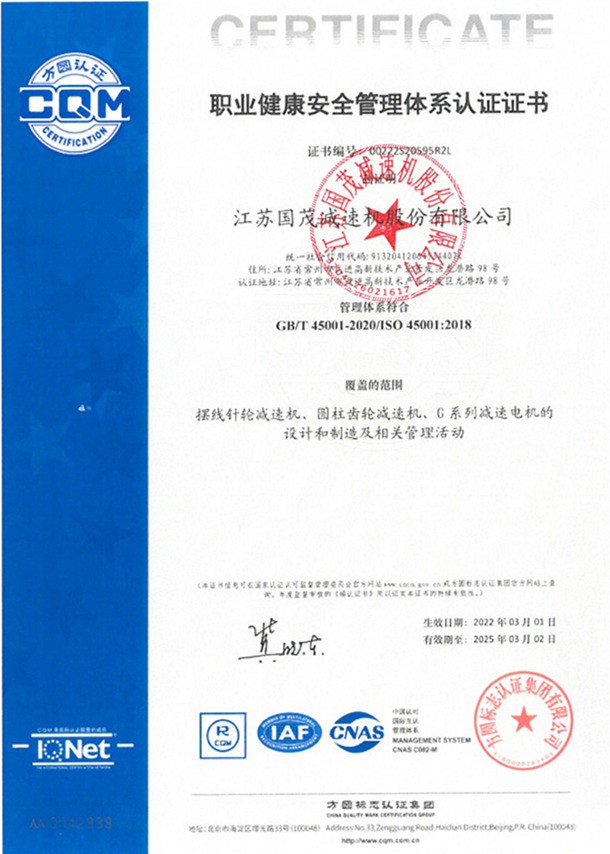
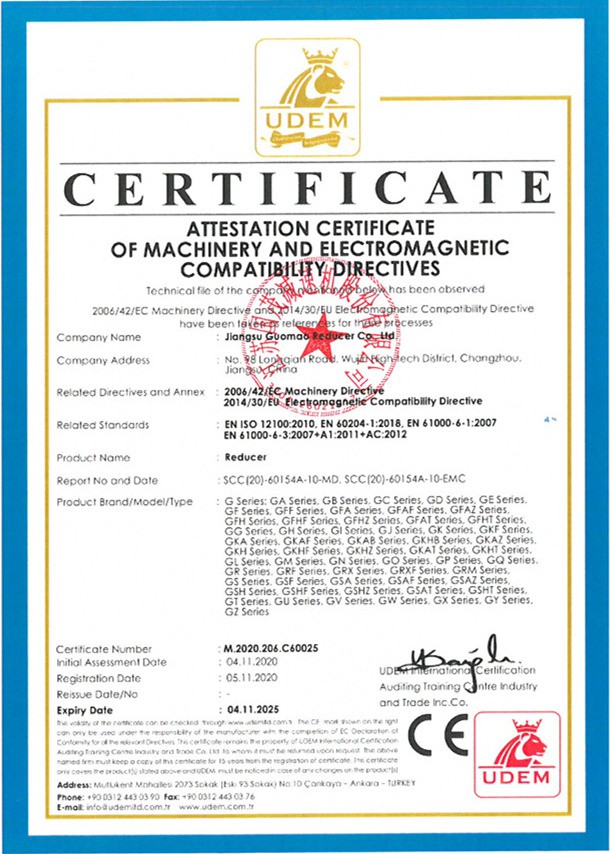
Certifications


Frequently Asked Questions
We're professional servo motor manufacturers and suppliers in China. We warmly welcome you to wholesale high quality servo motor made in China here from our factory. For customized service, contact us now.