

In the contemporary digital age, data centers stand as the backbone of global information technology infrastructure. These facilities house an extensive array of servers, storage systems, and networking equipment, all of which demand a stable and reliable power supply to ensure seamless operation. AC inverters play a pivotal role in this context, converting direct current (DC) power into alternating current (AC) power, which is essential for the proper functioning of data center equipment. As an AC inverter supplier, understanding the specific requirements of data centers is crucial to providing high - quality products that meet their unique needs.
Power Capacity and Scalability
One of the primary requirements for an AC inverter in a data center is its power capacity. Data centers vary significantly in size and power consumption, ranging from small edge data centers to large - scale hyperscale facilities. The inverter must be capable of delivering sufficient power to meet the load requirements of the data center equipment. For small - to - medium - sized data centers, inverters with a power capacity in the range of a few kilowatts to several hundred kilowatts may be sufficient. However, large hyperscale data centers can require inverters with power capacities in the megawatt range.
Scalability is also a key consideration. Data centers often experience growth in their computing needs over time. An ideal AC inverter should be easily scalable, allowing data center operators to add additional inverter capacity as the demand for power increases. This scalability can be achieved through modular inverter designs, which enable the easy integration of additional inverter units into the existing power system. For example, our company offers a range of modular AC inverters that can be configured to meet the specific power requirements of different data centers, whether it's a small startup or a large enterprise data center.
High Efficiency
Efficiency is a critical factor in data center operations, as it directly impacts energy consumption and operational costs. AC inverters with high efficiency can significantly reduce the amount of energy wasted during the conversion process. In a data center, where energy consumption is a major expense, even a small improvement in inverter efficiency can result in substantial cost savings over time.
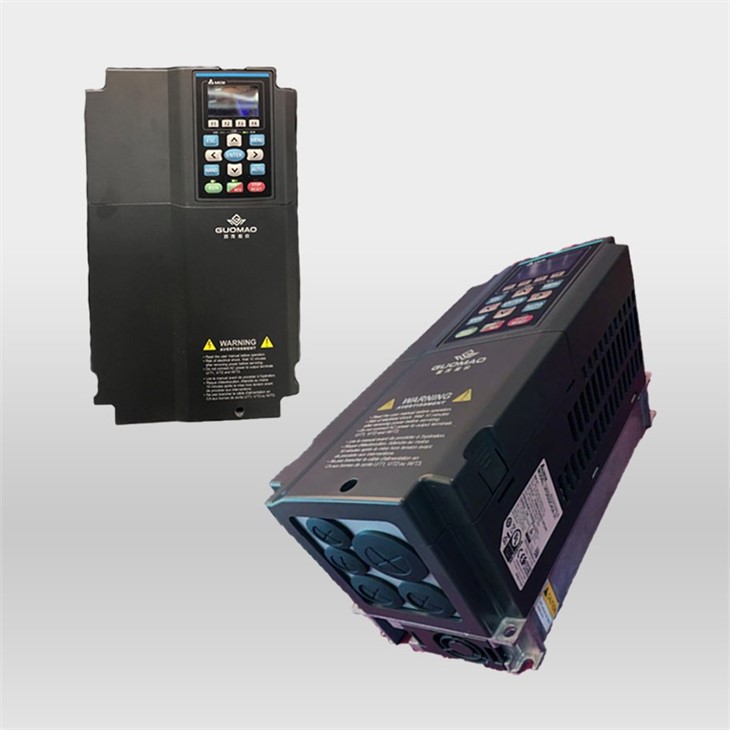

Modern AC inverters are designed to achieve high efficiency levels through advanced power electronics technology. For instance, some inverters use insulated - gate bipolar transistors (IGBTs) or silicon carbide (SiC) transistors, which have lower switching losses compared to traditional transistors. These advanced components enable the inverter to convert DC power to AC power with minimal energy loss. Our GM800 AC Inverter is equipped with state - of - the - art power electronics technology, achieving an efficiency of up to 98%, which helps data center operators reduce their energy bills and carbon footprint.
Power Quality
The quality of the AC power output is of utmost importance in a data center. Servers and other sensitive equipment in a data center require a clean and stable power supply to operate properly. Any fluctuations or disturbances in the power supply can lead to equipment malfunctions, data loss, and downtime.
An AC inverter used in a data center should be able to provide a high - quality AC output with low total harmonic distortion (THD). THD is a measure of the deviation of the AC waveform from a pure sine wave. High THD can cause overheating in electrical equipment, reduce the lifespan of components, and interfere with the operation of sensitive electronics. Our inverters are designed to have a low THD of less than 3%, ensuring a clean and stable power supply for data center equipment.
In addition to low THD, the inverter should also be able to maintain a stable output voltage and frequency. Voltage and frequency variations can cause problems such as equipment shutdowns and data corruption. Our AC inverters are equipped with advanced control algorithms that can quickly adjust the output voltage and frequency to maintain a stable power supply, even in the face of sudden changes in the load.
Reliability and Redundancy
Reliability is non - negotiable in a data center environment. A single power outage can result in significant financial losses and damage to a company's reputation. Therefore, AC inverters used in data centers must be highly reliable and have a long service life.
To ensure reliability, our AC inverters are built with high - quality components and undergo rigorous testing during the manufacturing process. We use redundant design techniques to minimize the risk of failure. For example, some of our inverter systems feature redundant power modules, so that if one module fails, the others can continue to provide power without interruption.
Redundancy is also an important aspect of data center power systems. Data center operators often implement redundant inverter configurations, such as N + 1 or 2N redundancy, to ensure continuous power supply. In an N + 1 redundant system, there is one additional inverter module compared to the number required to meet the normal load. In a 2N redundant system, there are twice as many inverter modules as required for the normal load. This redundancy provides a high level of protection against inverter failures and allows for maintenance and repairs to be carried out without disrupting the power supply to the data center.
Compatibility and Integration
AC inverters in a data center must be compatible with other components of the power system, such as uninterruptible power supplies (UPS), batteries, and generators. Compatibility ensures seamless integration of the inverter into the existing power infrastructure and allows for efficient operation of the entire system.
Our AC inverters are designed to be highly compatible with a wide range of UPS systems and batteries. They can be easily integrated into both new and existing data center power systems, providing a flexible solution for data center operators. For example, our C2000 AC Inverter can be connected to different types of UPS systems and batteries, allowing data center operators to choose the most suitable power configuration for their needs.
Monitoring and Control
Effective monitoring and control are essential for the proper operation of AC inverters in a data center. Data center operators need to be able to monitor the performance of the inverters in real - time, including parameters such as power output, efficiency, temperature, and fault status.
Our AC inverters are equipped with advanced monitoring and control systems that allow data center operators to remotely monitor and manage the inverters. These systems provide detailed information about the inverter's performance and can generate alerts in case of any abnormal conditions. The monitoring and control systems can also be integrated with the data center's overall management system, enabling centralized control and management of the power infrastructure.
Environmental Considerations
Data centers are increasingly being held accountable for their environmental impact. AC inverters should be designed with energy efficiency in mind to reduce carbon emissions. Additionally, they should be able to operate in a wide range of environmental conditions, including high - temperature and high - humidity environments.
Our inverters are designed to be environmentally friendly, with high - efficiency operation that reduces energy consumption and carbon emissions. They are also built to withstand harsh environmental conditions, with features such as dust - proof and waterproof enclosures, and wide - temperature - range operation.
Conclusion
As a leading AC inverter supplier, we understand the unique requirements of data centers and are committed to providing high - quality products that meet these needs. Our AC inverters offer high power capacity, scalability, efficiency, power quality, reliability, compatibility, and advanced monitoring and control features. Whether you are building a new data center or upgrading an existing one, our inverters can provide a reliable and efficient power solution.
If you are interested in learning more about our AC inverters or would like to discuss your specific data center power requirements, please feel free to contact us. We look forward to working with you to provide the best power solution for your data center.
References
- DOE. (2023). Energy Efficiency in Data Centers. Retrieved from Department of Energy official publications.
- IEEE. (2022). Standards for Power Systems in Data Centers. IEEE Transactions on Power Electronics.