

Hey there! I'm an AC inverter supplier, and today I want to chat about how the power factor affects the efficiency of an AC inverter. It's a topic that might seem a bit technical at first, but I'll break it down in a way that's easy to understand.
First off, let's talk about what power factor is. In simple terms, power factor is a measure of how effectively electrical power is being used in a circuit. It's a ratio that compares the real power (the power that actually does useful work) to the apparent power (the total power supplied to the circuit). A power factor of 1 means that all the power supplied is being used effectively, while a power factor less than 1 indicates that some of the power is being wasted.
Now, how does this relate to AC inverters? Well, AC inverters are devices that convert DC power (like the power from a battery) into AC power (the type of power used in most household and industrial applications). The efficiency of an AC inverter is crucial because it determines how much of the input power is actually converted into usable output power.

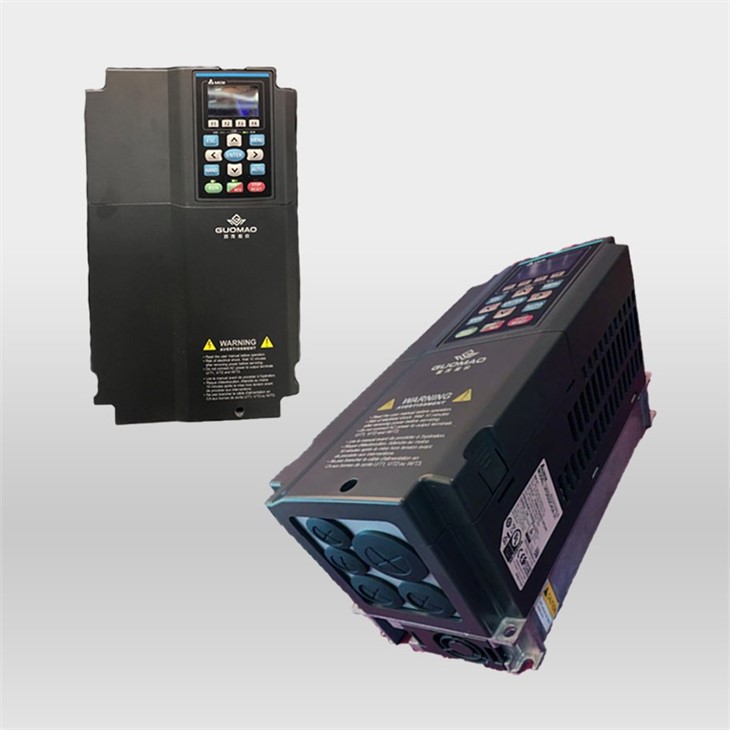
A low power factor can have a significant impact on the efficiency of an AC inverter. When the power factor is low, more current is required to deliver the same amount of real power. This means that there are higher losses in the inverter's components, such as the switching devices and the inductors. These losses manifest as heat, which not only reduces the efficiency of the inverter but can also lead to overheating and potentially damage the device.
Let's take a closer look at some of the ways a low power factor affects an AC inverter:
Increased Current and Copper Losses
As mentioned earlier, a low power factor requires more current to be drawn from the source. In the inverter, this increased current flows through the copper windings of the inductors and transformers. Copper has a certain resistance, and according to Ohm's law (V = IR), when the current (I) increases, the voltage drop (V) across the resistance also increases. This results in higher power losses in the form of heat, known as copper losses. These losses reduce the overall efficiency of the inverter.
Higher Stress on Components
The increased current due to a low power factor also puts more stress on the inverter's switching devices, such as MOSFETs or IGBTs. These devices are responsible for controlling the flow of current in the inverter. When the current is higher, the devices have to handle more power, which can lead to increased wear and tear. This not only reduces the lifespan of the components but can also increase the risk of component failure, leading to costly repairs or replacements.
Reduced Capacity
A low power factor can also reduce the effective capacity of an AC inverter. The rated capacity of an inverter is usually specified in terms of its apparent power (in volt - amperes, VA). However, the real power that the inverter can deliver is determined by the power factor. For example, if an inverter has a rated capacity of 1000 VA and a power factor of 0.8, the maximum real power it can deliver is only 800 watts (since real power = apparent power x power factor). This means that the inverter may not be able to meet the full power requirements of the load, even though it has a relatively high VA rating.
So, what can be done to improve the power factor and increase the efficiency of an AC inverter?
Power Factor Correction (PFC)
One of the most effective ways to improve the power factor of an AC inverter is through power factor correction. PFC is a technique that involves adding a circuit to the inverter to adjust the current waveform so that it is more in phase with the voltage waveform. This reduces the reactive power and increases the power factor closer to 1. There are two main types of PFC: passive and active.
Passive PFC uses inductors and capacitors to correct the power factor. It is a relatively simple and inexpensive solution but is less effective at high power levels. Active PFC, on the other hand, uses a switching converter to actively control the current waveform. It can achieve a power factor very close to 1 and is more suitable for high - power applications.
Selecting the Right Inverter
When choosing an AC inverter, it's important to consider the power factor requirements of your application. Some inverters are designed with built - in PFC to ensure high efficiency. For example, the C2000 AC Inverter and the GM800 AC Inverter are both known for their excellent power factor correction capabilities, which can significantly improve the efficiency of your system.
In conclusion, the power factor plays a crucial role in the efficiency of an AC inverter. A low power factor can lead to increased losses, higher stress on components, and reduced capacity. By understanding the impact of power factor and taking steps to improve it, such as using power factor correction techniques and selecting the right inverter, you can ensure that your AC inverter operates at its maximum efficiency.
If you're in the market for an AC inverter and want to learn more about how to optimize the power factor and efficiency of your system, I'd love to chat. Whether you're a small business owner looking for a reliable inverter for your office equipment or an industrial operator in need of a high - power solution, I can help you find the right product for your needs. Don't hesitate to reach out and start a conversation about your requirements.
References
- Chapman, S. J. (2012). Electric Machinery Fundamentals. McGraw - Hill.
- Mohan, N., Undeland, T. M., & Robbins, W. P. (2012). Power Electronics: Converters, Applications, and Design. John Wiley & Sons.